
Dr Alex Zumazuma (MBBS)
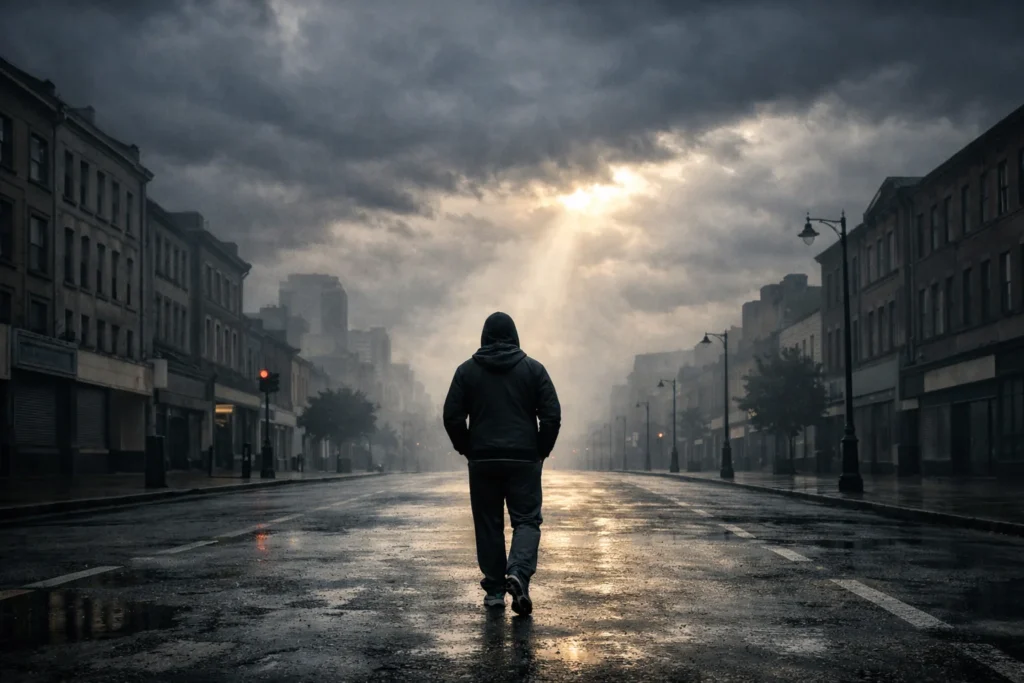
Commentary: This is a story of an individual who traveled to a foreign land before covid-19 had spread throughout the world. It describes how isolation because of lockdown got to his mental health and how he ended up seeking help from a mental health specialist. The story also narrates the stigma that is associated with the virus.
The uncertainty about the virus and losses related to it (freedom of association, loss of businesses, jobs, etc.) has affected many individuals around the world (stress, anxiety, depression, grief, etc.). The story ends with the individual seeking help, and to me, it ends with questions, especially since I live in a low-resource setting: How can we help and support those who are struggling with anxiety, stress, grief, etc.? How can we make services available to anyone who needs them?
Part 1: the journey into foreign land and the beginning of the descent
There were little drops of snow the day I flew in.
On the bus, making way to the train station, the flakes cascaded with uncertainty. Later, there would be moments of sunshine. Kind and uncertain. Yet, a hope that the world I had left behind might be chanced upon here—even if by accident.
The flights had been three. And tiresome. On one, mid-flight, I had developed a bad case of the flu. Then, a small fever. In Ethiopia, waiting for a connecting flight, I texted a friend:
‘’Developed a bad flu mid-air; I hope it is not corona.”
Then, we joked back and forth. That it was corona. It was not corona. I still had the flu but not as bad as it was midflight. It was, in a way, tamed now.
On the next flight, the longer one, I sat next to two gentlemen in face masks. I was slightly amused. It was February, the virus was ravaging in China, and certainly it could not have been that bad. The flight was from Ethiopia to Addis Ababa.
I slept through a part of the journey. On arrival in London, the flu was for all practical purposes gone. On the next, and last, flight, I staggered in and out of sleep. No face masks. No sanitization. Just life as we know—or, aptly, knew—it. Evidently, coronavirus was a distant threat.
At the end of my journey, arriving in the United Kingdom, the weather was certainly not mean but also not very kind. I settled in.
I arrived late. I hit the ground. Started showing up at the university.
Part 2: Denial and Stigma
Through it all, the virus was a distant threat. A fodder for television news. Known but not feared. It was in China.
The other day, in searching for a flat, I met a Chinese flatmate. He was surprised I extended a hand for a handshake. In between accents, he told me that people were afraid of sharing the flat with him because he was Chinese. But, he affirmed, the last time he had been in China was almost a year back. I just dismissed everything: him, the flat, and his claim. I was surprised people were even linking the virus to Chinese bodies.
Then, the emails started coming in.
The first one (for those announcing lockdown measures) was kind, at least to graduate students: face-to-face learning was to be suspended. However, graduate students could still use the graduate school.
It sounded fair.
Then, in hours, the threat levels were revised, and with them, the conditions for graduate students: the graduate school as well was going to be closed. Another work from home moment.
And there was a kinder feeling to the work-from-home announcement. I have increasingly come to be a ‘work in private and let the results speak’ person. In graduate school, I was just about to develop actual and proper friendships. Working from home? It did not sound bad. It did not seem bad. My sleep pattern was, anyway, yet to adjust, so working within a self-defined limit seemed kind enough.
And it was. For the first days.
There was energy. And order. In the midst of scary headlines in the news and sorrow in the corridors of the hospitals.
I would wake, then work, and take the necessary breaks and catch up with friends and family back at home. And laugh. And listen to music. And fight on Facebook with Malawians over elections and coronavirus. Until the greyness of the walls mirrored in the soul.
Part 3: sadness (depression) and anxiety
Then, getting out of bed became this frustrating adventure.
The first day I stayed in bed and watched the day pass by in slow, unguided motion. It was 8 in the morning when I woke up. It was after 8 in the evening when I got out of bed. In bed, I had tried to lift my spirits. I had logged into Netflix, but everything seemed stale, each plot complex and each acting at the wrong pace—either too fast or too slow, just mechanical.
On Facebook, the conversations had been uninspiring.
Sleep? It was far much easier to get rid of the coronavirus with a magic wand than to get some sleep, even for minutes.
It became a moment of contemplation. Fear. Diving into anxiety. Expecting the world to fall off from its axis or burn—just something that would put a pause to the global order.
When I got out of bed, far much later than 8 pm, it was just to grab something to eat. Something light. Something needing no preparation. It was as if, in a way, I was afraid of my own existence and reality.
However, it was a sinking into a pit of depression. At the same time, a deadline was looming.
It is easy, I think, to say be at peace with yourself when facing depression. The things that feel-good speakers advocate: embrace your mental health and give your brain and mind the space to adjust.
But when you have been through that road of depression and have ever staggered through its highways, brushing shoulders with reckless drivers dragging you to the ends of life, you do not look at depression the same way. You do everything to avoid it. Because it is costly to get there. It is too costly to get out of there.
But here I lie, with limited power. Watching the world crawl back into darkness for another night of despair.
Night again.
The next day, the same darkness. On the desk, work waited. I pulled open the curtains. There was sunshine. There was life going on outside. In the distance, cyclists kept exercising. Amid the chaos of figures of the dead rising.
Part 4: acceptance and seeking helping
I contemplated going out, just for some exercise. Then, the thought of a deadly virus roaming out there scared me. But I was also running out of food and other essentials. I pulled myself out of bed. Into the bathroom. There were toothpaste, a toothbrush, and mouthwash. Life was heavy. Tasks were undoable. I poured the mouthwash into the mouth. After a minute, I spat. Mouth washed out. Grabbed a sanitizing wipe and rubbed the face clean.
Then, I jumped into jogging pants and a dirty T-shirt. Hit the road for the market.
The road reeked of familiarity. The skies, greyish blue, carried a sense of ease. There was silence. The road was almost deserted. It was windy.
I thought of home. I realized even if I so badly wanted to go home, I could not. This was not just a lockdown. This was a lockdown thousands of miles away from home. Away from family. Away from the cheering and mocking laughter of friends.
Everything, then, wore a new face. Of infuriating unfamiliarity. A sadness that cannot be written down. An eerie strangeness.
The road became dirty asphalt in a prison. The sky, once spreading and a symbol of limitless possibilities, became a minefield pregnant with harm and death. I thought of the day I flew. The flu in the air. I feared because there had been reports that some studies had suggested the virus was also airborne and stayed far longer in the air: what if this air were poisoned?
In getting back to the flat, it was the ache of homesickness and the fear of depression in the midst of a global chaos that hit hard. I drew the curtains. Slumped back into bed.
Accepted that life was taking a different turn. The madness was approaching. I needed to take action. I contacted the university counselling team.