
By Ivy Kwatiwani
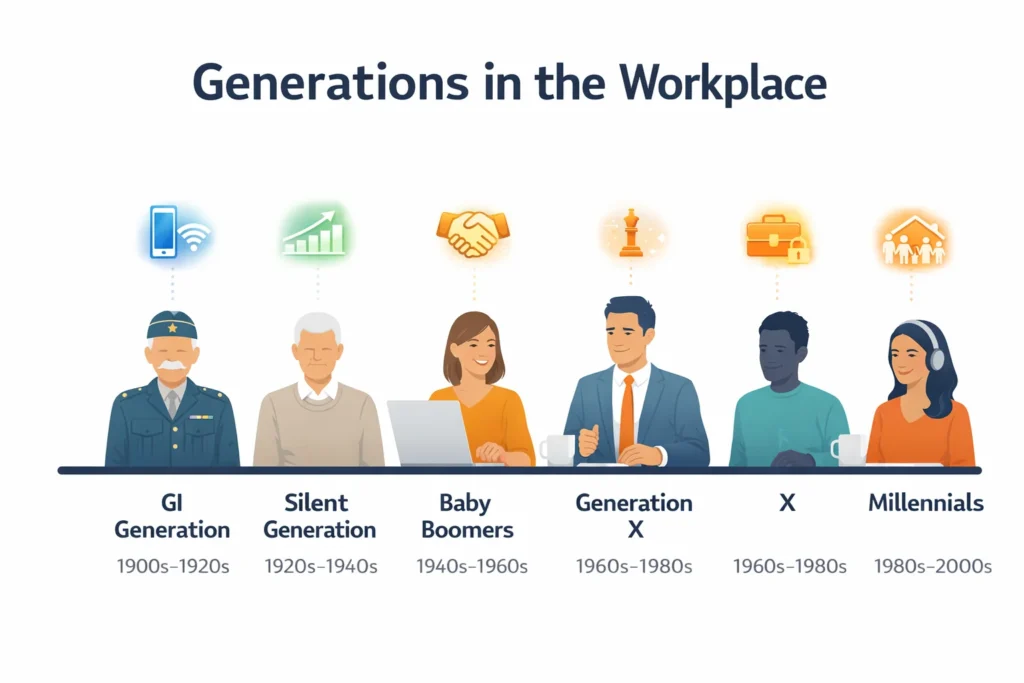
The era in which an individual is born, consequently the events experienced whilst growing up and during their lifetime has significant impact on how they engage with, and experience the world and more specifically the world of work. These experiences inform a value system showing large elements of commonality amongst similar generations.
The proponents of generational theory never intended for it to be a one size fits all approach, to stereotypically box individuals into a specific era. It is merely recognition that people’s values are formed by various influences most notably the significant events experienced in their lives then. This does not speak to personality, culture and religions but rather to those values each generation hold dear and have in common in particular referring to the world of work.
There is enough anecdotal evidence to suggest that having various generations in the workplace provides huge potential for conflict as the values the older generations hold dear are often in direct opposition to values held dear by the younger generations. A recent study done by the writers of “Mind the Gap” the seminal work on generational theory, the evidence suggests that the general tenants of generational theory is acceptable not only in western cultures but also the developing countries. What was significant was that the value systems held common by generations could be even more predictive of behavior than race, meaning people from similar generations but from different race groups may feel closer than people from the same race but different generations. There is therefore many opportunities for conflict where these values clash, but also great opportunity to be leveraged using the various styles and approaches to work these different generations bring.
Defining a generation
A generation can loosely be defined as a period spanning about 20 plus years meaning people born in the span of that 20 year period would make up a generation. This is further explained by how long it would take for a generation to replicate itself (start having children and families of their own)
The book “Mind the Gap” by Graham Coddington and Sue Grant Marshall identifies 5 generations briefly described below:
- The General Issue (GI) Generation (Born between the 1900’s and the 1920’s)
- The Silent Generation (Roughly born between the 1920’s and the 1940’s)
- The Baby Boomers (Roughly born between the 1940’s and the 1960’s)
- Generation X (Roughly born between the 1960’s and the 1980’s)
- Generation Y (Roughly born between the 1980’s and 2000’s “The Millennials”)
The first three generations are no longer represented in the workplace, the baby boomers are almost moving out of the workplace, generation X is middle aged with some on the wrong side of 50, whilst the “The Millennials” are now flooding the workplace. The Millennials are extremely comfortable with technology, value strong leadership, enjoy engaging with older people, want to be mentored, want to know why, want to be involved, and want to create a better world. To maintain their competitive edge, organizations have to manage their human aspect well and understand that the Millennials are not just flooding the workplace, but they are here to stay and need to be managed differently, whilst not losing focus on the older generations. This means human capital practices need to be targeted, for organizations to remain competitive and be regarded as employer of choice.
What Millennials want from their leaders and the world of work?
- My career – develop and grow my career
- My quality of life – integrate my work with my personal life
- My contribution – I want a company that is responsible for its employees, communities and the environment
- My financial health – I want to have financial freedom and security
Three workforce typologies that enables more targeted proposition and communication
1. Career: Starter
Example: New to work/role.
2. Career: Explorer
Example: Has been in their career/role for a short period and is building skill and finding meaning in work.
3. Career: Establisher
Example: Honing leadership skills/expertise & looking to settle down.
Organizations need to take a deep nose dive into initiatives that can bring helpful insights into the prevalence of the Millennials’ value system and how it impacts the company’s ability to deliver on their mandate. It could assist in providing managers with the necessary skills to engage with their teams and potential clients. So what is a manager’s call to action in terms of his/her role as a leader? How can managers lead the next generation?
Leading the next generation.
- Provide Purpose and not Perks
Employees are looking for a chance to grow and a sense of purpose. Clearly link their work to the purpose and outcomes of the organization and continuously reinforce this.
- Coach and Mentor
Take time out to coach and mentor your employees. Coaching, mentoring and encouraging employees can have a significant impact on their engagement
- Build Career experiences and Opportunities
Create opportunities for employees to gain a variety of relevant experiences. Seek out projects or work opportunities for employees to get involved in.
- Provide Constant Performance/Career Feedback and Recognition
Millennials want to know that they are “doing things right.” Provide them with constant feedback and recognition of their performance. Seek out positive moments for employees to celebrate
- Encourage Millennials to get involved in our Responsible Business Initiatives
Employees want to work for an organization that gives back to the community. Take time out as a team to do ‘Care and Share’ initiatives and give back. As a leader, be visible in getting involved in these initiatives.