
By Bright Liman
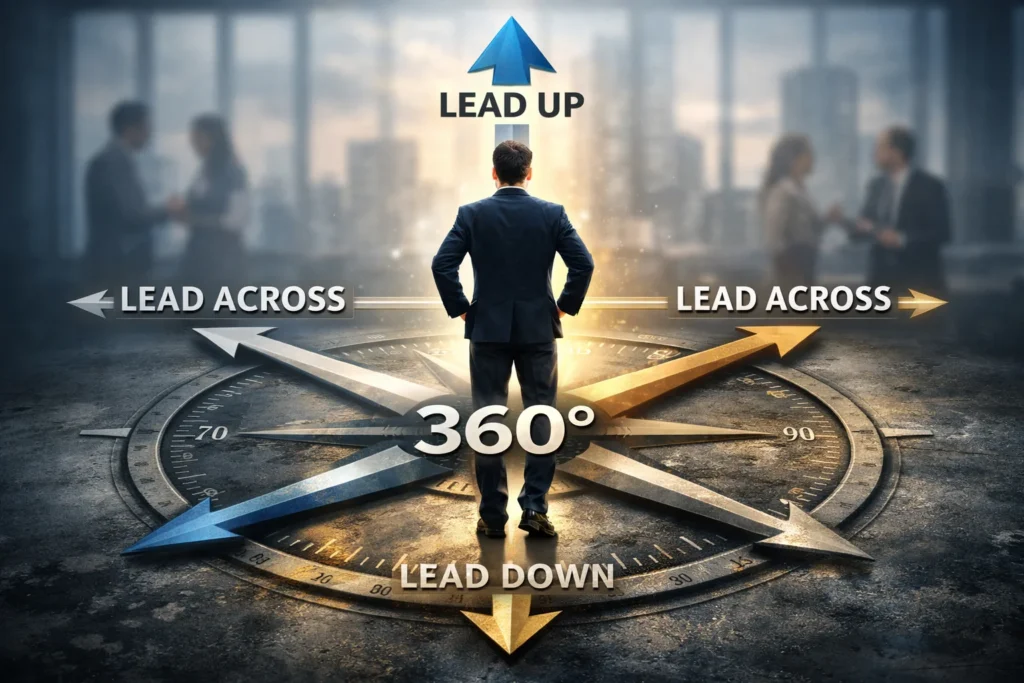
The 360-degree leader is a different type of leader. He or she is not a top leader. He or she is not a frontline leader. He or she does not occupy frontline or top leadership positions. This means that 360 leaders are not managing directors, country directors, managing partners, chief executive officers, directors, board members, and many other top managers. The 360-degree leader is a leader who leads from the middle position of the organization. He or she is a leader at the middle management position. This means the leader has to lead himself, his boss, his peers, and his subordinates. This is more challenging.
A common leadership myth is, “If I don’t have a team, I can’t lead.” But you can and should. Early in your career – before you supervise others – is precisely the time you should start honing and developing your leadership skills. You should learn to lead long before landing an executive spot in your company’s hierarchy. Then—and only then—can you truly understand how to inspire and influence others.
Here are four steps you can take toward becoming a 360-degree leader:
Firstly, lead yourself exceptionally well. When you are able to self-manage different aspects of your personal life—including your energy and time—you are in a better position to lead others. Leadership is a lifestyle, and by learning to lead yourself, others will begin to follow, respect, and partner with you. Secondly, lead your superiors (bosses).
Once you have mastered the art of leading yourself, you will be ready to learn how to lead your boss. When you can decipher what your boss wants, you can help them achieve their goals. By lightening your leader’s load and being willing to do what others won’t, your value will increase and your influence will become greater. Good leaders create better senior leaders and make organizations better overall.
Thirdly lead your peers or team members. To succeed in peer-to-peer leadership, a 360-degree leader must gain the respect of his or her colleagues. Doing so is as simple as taking an interest in, and getting to know, team members across departments. When you do, you will create stronger relationships and achieve success together. In the fourth place, lead your employees.
The last concept in being a 360-degree leader is the idea of “leading down.” In this area of leadership, you can add value and help others discover how to reach their potential. Leadership is a “people business,” and in order to lead, you must connect with others and develop each team member as an individual. In a nutshell, to be a 360-degree leader, lead yourself, lead your boss, lead your peers, and lead your subordinates.
Bright Limani is currently finalizing his final year of postgraduate studies in management studies at the Malawi Institute of Management (Blantyre Campus). He has a Bachelor of Arts degree in Human Resources Management with DISTINCTION and a Bachelor of Arts degree in Humanities with CREDIT. Both were obtained at Chancellor College, University of Malawi. Limani is a highly experienced HR and management consultant.